

Securing climate resilience through solar power for Kiribati’s outer islands
Funding round: Round one
Country: Kiribati
Sector: Community development
This project is bringing clean, reliable and affordable electricity to more than 200 households and around 800 people living on two of Kiribati’s most remote and climate-vulnerable islets: Riboono in the Abaiang outer island, and Tabuarorae in the Onotoa outer island.
Through the installation of new solar mini-grids with battery storage and backup diesel generators, the project will power homes, schools, health centres and small enterprises, reducing reliance on costly imported diesel, providing electricity access to the entire island, and strengthening resilience to the impacts of climate change.
Led by the Global Green Growth Institute (GGGI), the partnership brings together Kiribati Green Energy Solutions (KGES), the Ministry of Infrastructure and Sustainable Energy (MISE), the Ministry of Culture and Internal Affairs (MCIA), the Office of the President (OB), and the islet communities of Riboono and Tabuarorae, with support from Australia’s REnew Pacific program. Together, these partners are expanding renewable energy access and building a more sustainable, climate-resilient future for Kiribati’s outer islands.
$3,000,000
$3,000,000
DFAT contribution
$1,535,466
$1,535,466
Partner contribution
$4,535,466
$4,535,466
Total funding
Partner

The Global Green Growth Institute Pacific team works in Fiji, Kiribati, Vanuatu, Tonga and Papua New Guinea to create a climate-resilient world through green sustainable growth.
Kiribati Green Energy Solutions (KGES) is a government agency responsible for implementing renewable energy projects and expanding clean energy access across Kiribati.

The Ministry of Infrastructure and Sustainable Energy (MISE) leads national infrastructure planning and sustainable energy development across Kiribati, supporting reliable, affordable and climate-resilient services for communities.

The Ministry of Culture and Internal Affairs (MCIA) oversees local governance, community development and cultural affairs, strengthening participation, inclusion and resilience across Kiribati’s islands.
The Office of the President, also known as the Office of Te Beretitenti (OB), assists the President (Beretitenti) and Cabinet as required to deliver their vision for the people of Kiribati. This includes secretariat and protocol support, ministerial coordination, and cross-Ministry functions including communications, disaster risk management and climate change policy.
The Tabuarorae Islet Community is a southern outer-island community in Onotoa, reliant on fishing and copra production for local livelihoods.
The Riboono Islet Community is a small community in Abaiang engaged in fishing, copra and subsistence farming.
About this project
New solar-diesel hybrid mini-grids with battery energy storage systems will be installed on Riboono and Tabuarorae, providing 24/7 renewable power for homes, schools, health centres and local enterprises. Together, these systems will supply more than 200 households and deliver stable, affordable electricity to around 800 people, transforming how energy supports daily life and local development on these remote islets.
Each system will be built, owned and operated by Kiribati Green Energy Solutions (KGES) under a sustainable utility model that ensures long-term operation, maintenance and community contributions through transparent, community-based tariff collection. Locally- recruited KGES technicians will be trained to manage the systems, supported by island councils and community solar committees that will help oversee performance and ensure ongoing operations and maintenance.
The project will also support greater inclusion and opportunity across the islets. Reliable electricity will reduce the time women and girls spend collecting water and fuel, improve lighting and safety, enable digital learning for students and create new livelihoods through refrigeration, connectivity and small-scale enterprise.
By replacing diesel with clean solar power, the project will lower energy costs, expand electricity access to all households, cut emissions and help Kiribati meet its renewable electricity generation goals, contributing to stronger, more climate-resilient island communities.
Context
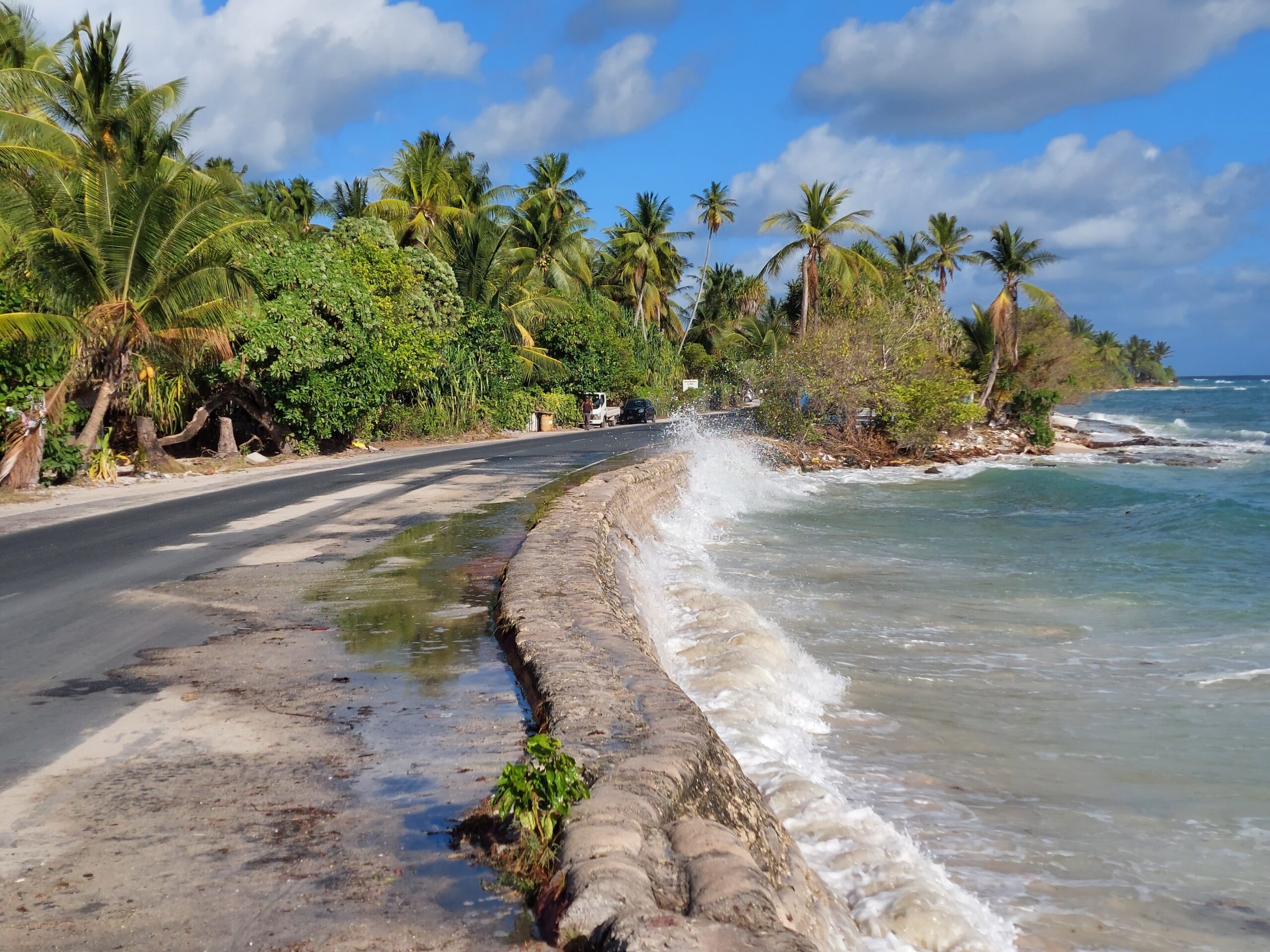
Kiribati’s outer islands are among the most remote and climate-vulnerable communities in the Pacific. Rising sea levels, saltwater intrusion and limited infrastructure make energy access a daily challenge, with most households relying on kerosene, candles or small solar lanterns. Public services such as schools and health centres often operate on costly and unreliable diesel power, leaving communities exposed to volatile fuel prices and frequent outages.
Expanding renewable energy to these islands is central to Kiribati’s Integrated Energy Roadmap. This project directly supports that goal, while advancing the Government of Kiribati’s commitment to strengthen resilience, reduce emissions and improve quality of life for rural populations.
Building on lessons from earlier renewable energy investments by the Government of Kiribati, GGGI and regional partners, the project demonstrates how local leadership, technical innovation and community partnership can work together to deliver lasting impact for Kiribati’s outer-island communities.