As part of our Women in Power series, we are celebrating the remarkable leaders driving the Pacific and Timor-Leste’s clean energy transition.
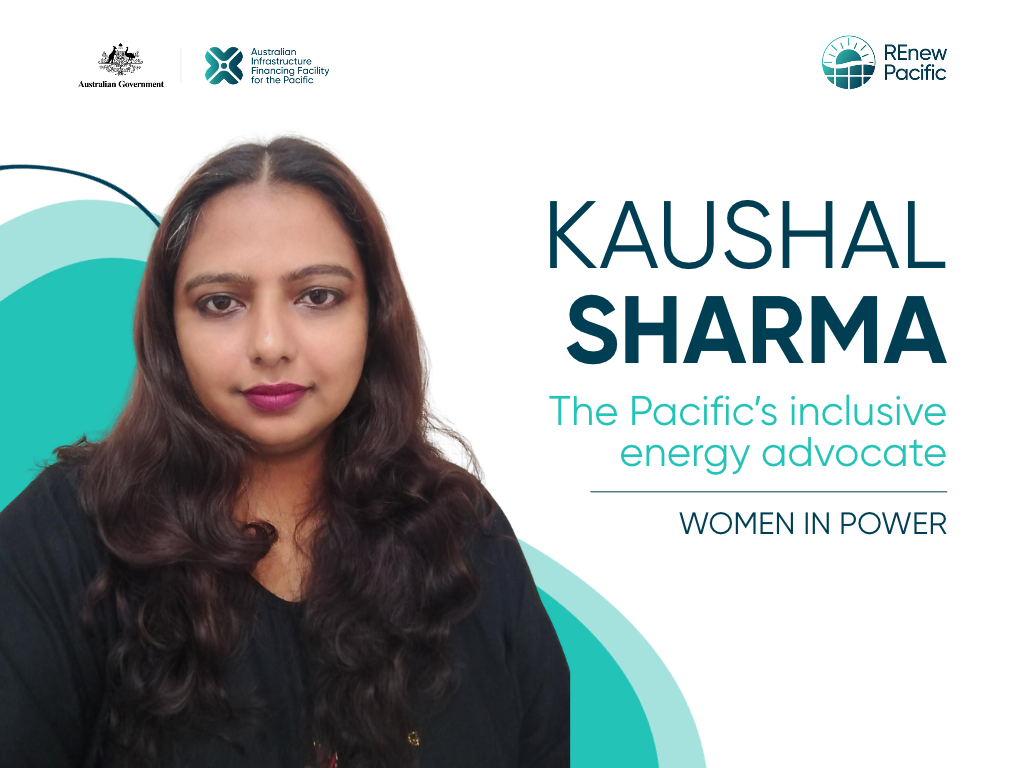
Whether a new solar system serves everyone in a remote community depends on decisions made long before the panels arrive. As REnew Pacific’s Gender Equality, Disability and Social Inclusion (GEDSI) Manager, Kaushal Sharma works from Fiji with the program and its implementing partners to make sure women and people with disabilities help shape those decisions, from the first planning discussions through to installation and monitoring.
Kaushal’s commitment to inclusive development began early in her career, when she saw how women and marginalised groups were often excluded from opportunities despite the important roles they played in their communities. Over the past decade she has worked across the Pacific on women’s rights and economic empowerment, collaborating with governments, development partners and women-led organisations to address barriers to equality.
Her career has included leadership and specialist roles with the Fiji Women’s Rights Movement, Australia Pacific Training Coalition and UN Women. She also founded The Gender Agenda, a consultancy providing GEDSI expertise to development programs across the region. Through this work, Kaushal developed a particular interest in helping organisations translate their commitments to inclusion into practical changes in how programs are designed and delivered.
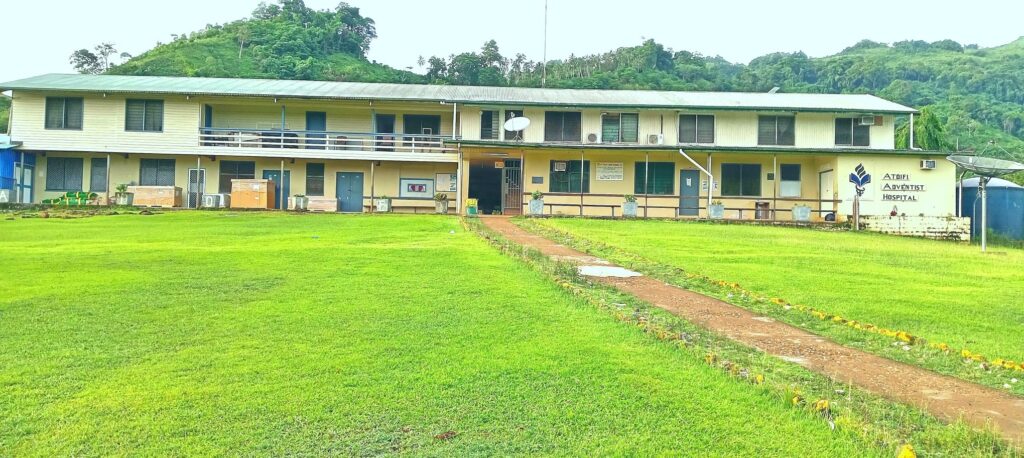
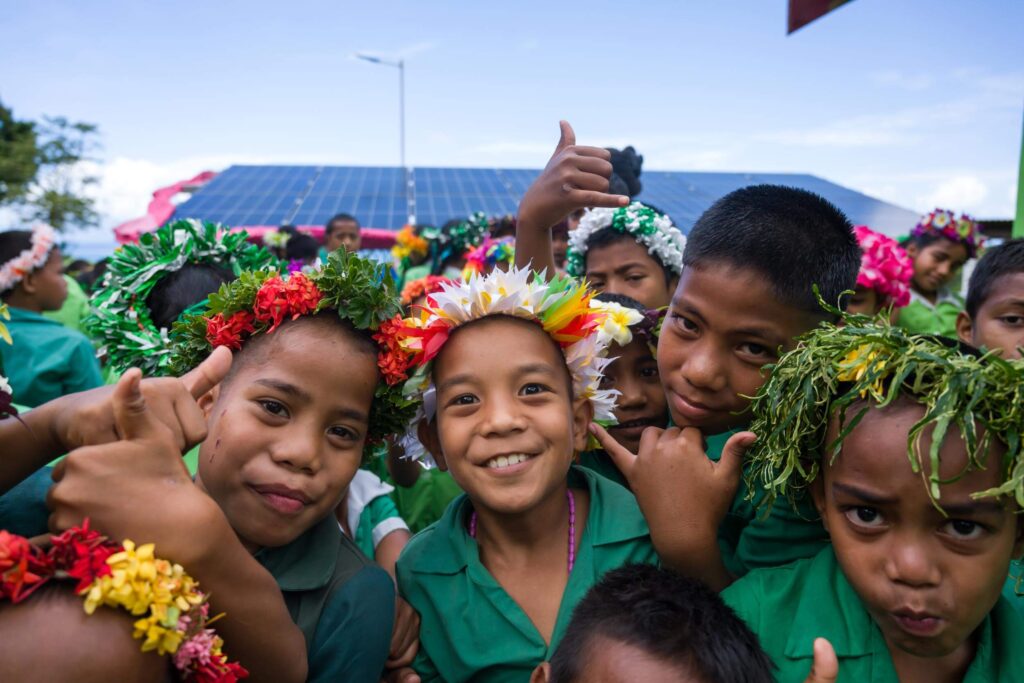
Since moving into the renewable energy sector in 2025, what she enjoys most is seeing how reliable power can create tangible opportunities and improve daily life. “Access to renewable energy can mean children have light to study at night, women feel safer moving around the village, health centres have improved capacity to provide essential services to remote communities and villagers, especially women, don’t have to walk long, treacherous paths to access water,” she says.
Her own path into the sector has also taught her that there are more ways to contribute to the clean energy transition than most people assume. “One of the biggest lessons I have learned is that you do not need to be an engineer to play a vital role in shaping renewable energy solutions,” she says. Alongside technical expertise, projects also need people who understand the communities they serve and can help ensure different voices are heard and different perspectives are considered.
Kaushal believes that women and other underrepresented groups should have greater opportunities to participate not only as beneficiaries but also as professionals and decision-makers. Beyond improving outcomes for individual projects, that increased visibility has the potential to challenge traditional expectations and reshape what the energy sector and Pacific communities expect of marginalised groups. She wants more businesses and development partners to build inclusion into their projects from the outset and keep it there at every stage. “Clean energy should be for everyone,” she says. “When renewable energy projects include and support all members of the community, they are more successful, sustainable and impactful.”
Looking ahead, Kaushal plans to continue working across the Pacific, supporting development programs that create more opportunities for women, people with disabilities and others whose perspectives have not always been represented. She hopes that as clean energy reaches more communities, the people who have long been left out of these conversations will have a hand in shaping what comes next.
Finally, she wants the next generation of women to know their contributions matter, whatever path they take into the sector. “Your voice matters, your choices matter, your leadership matters,” she says. “We need to focus on building a future where everyone belongs.”
___
Kaushal’s story is part of a wider effort across the Pacific and Timor-Leste to bring clean, reliable energy to remote communities, building local skills and ownership so that everyone shares in the benefits.
Across the region, women are stepping into roles that are reshaping how energy is generated, managed and shared. Their leadership is not only powering homes, schools and businesses with clean energy, it is building stronger, more resilient communities and showing what an inclusive energy future looks like.
We’re proud to showcase some of these remarkable leaders through our Women in Power series, which highlights women powering change through REnew Pacific.