Ask what electricity changes in a home and the answer is rarely grand. It’s a lamp to read by after dark. A phone charged to call family. A fridge that keeps food and medicine cold. Water closer to home. As we count down to #COP31, we’re looking at the everyday difference clean, reliable power makes in communities the grid has never reached.
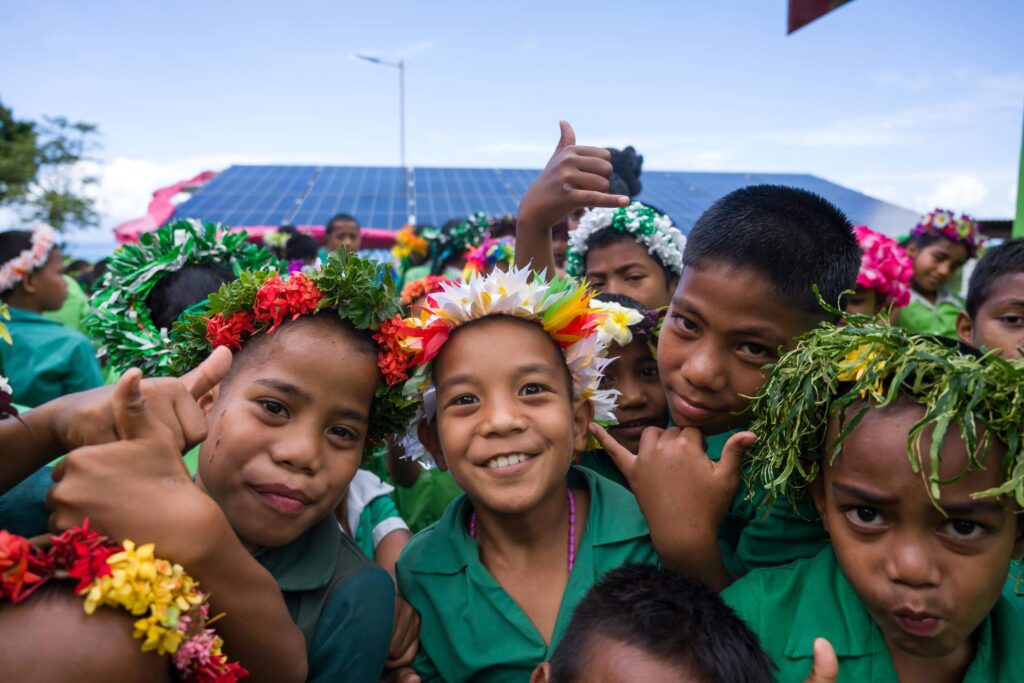
In Samoa, REnew Pacific’s first project is bringing solar and battery systems to 108 households and five community fales across Upolu and Savai’i, reaching families who have long relied on kerosene lamps, wood fires and disposable batteries for light. Led by the Electric Power Corporation (EPC), it means children can study into the evening, homes are safer without the smoke and fire risk of kerosene lamps, and phones and appliances can be charged without a trip into town. Twenty of the most vulnerable households are being supported through a fast-track partnership with the Ministry of Women, Community and Social Development so the families who need it most aren’t left behind.
The five community fales matter just as much. These shared village spaces give people who can’t host a system at home somewhere to charge phones, gather under lights and use shared appliances, while supporting village meetings, youth programs and women’s committees. It turns energy access into something the whole village shares. Find out more here.
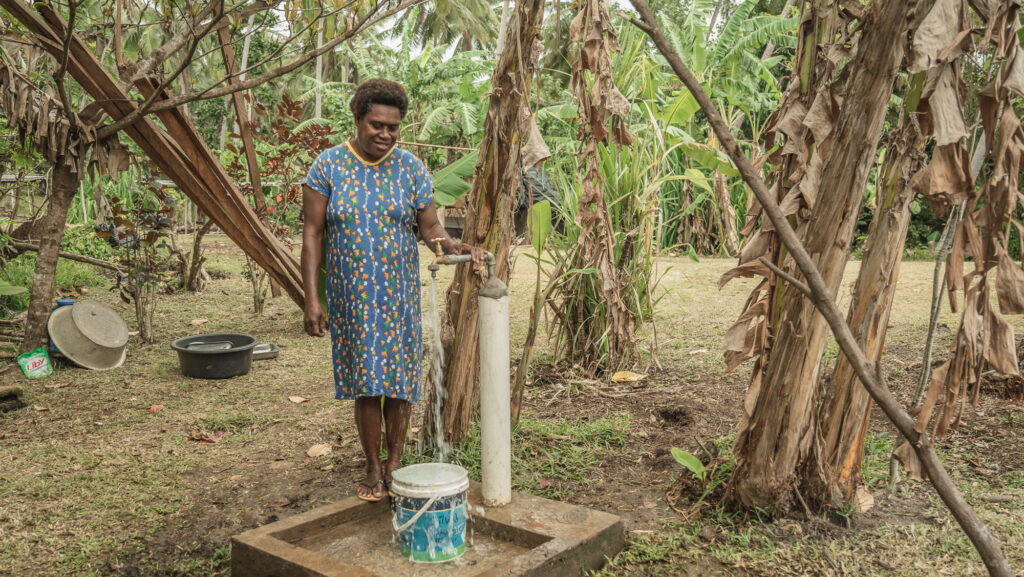
In Vanuatu, that everyday difference is measured in water closer to home. In the remote community of Petervat, in north Malekula, a new solar-powered system pumps water from a natural spring to five taps around the village, delivered by GGGI and Vanuatu’s National Green Energy Fund. “In the past, we relied on water from the river, but now we have access to water from a natural spring, and daily life is much easier,” says Jamie Vaxal, Secretary of the Petervat Community Water Committee. Petervat is one of nine communities across Santo, Paama, Tanna and Malekula gaining solar-powered water under this REnew Pacific project, with the systems at Petervat and Lerengrong both switched on in recent weeks. The project is also equipping 24 schools and health centres with solar and training locals to run the systems themselves, reaching more than 5,100 people in all. Find out more here.
In Fiji, that everyday difference reaches the teachers who live where they work. Through REnew Pacific, It’s Time Foundation is powering more than 30 remote and maritime schools along with the staff houses on their grounds so teachers posted far from the nearest town finally have reliable light and power at home. It means preparing lessons in the evening and keeping a phone charged are no longer a daily struggle, making remote postings easier to live in, and helping schools keep the teachers their students depend on. Find out more here. Find out more here.
And in Papua New Guinea, one of REnew Pacific’s earlier pilots shows how far a single household system can reach. Through Sola PayGo, delivered under the Business Partnerships Platform, more than 7,000 families in remote communities have swapped kerosene, candles and torches for pay-as-you-go solar at home, gaining an average of 35 extra usable hours a week. Nine in ten households say their children are now studying more and quality of life improved for nearly everyone surveyed. One teacher put it simply: “We finally have a better lighting system in our home so I can stay up late to mark my students’ papers and prepare their lessons. My children can also finally study well.” Find out more here.
This is what the energy transition looks like at its most personal: a lamp, a fridge, a charged phone, water closer to home. It’s the difference REnew Pacific is working to make across the Pacific and Timor-Leste by supporting locally led projects that bring clean, reliable energy within reach of the communities furthest from the grid. These projects are all part of the Pacific Climate Infrastructure Financing Partnership (PCIFP), a $350 million initiative for climate infrastructure in the region, delivered by the Australian Government’s Australian Infrastructure Financing Facility for the Pacific (AIFFP) and implemented by Palladium.
You can hear more about this work at Pre-COP, where REnew Pacific will feature in the Powering the Pacific: Climate Resilience, Energy Security and Developmentsessionon Monday5 October. The session brings Pacific and Australian leaders together to share on-the-ground impact and insights from across the region. One of the teachers from It’s Time Foundation’s Fiji schools will speak to what reliable power has meant for her school and community. Register here.
Join us each week for a new story as we count down to COP31.
This week’s countdown comes from the Australian High Commission in Samoa, at 6 weeks to go.