A solar system is only as good as the plan to keep it running. Across the Pacific, the hardest part isn’t switching the power on, it’s making sure it’s still on in ten years, in places where the nearest technician can be a boat ride away. As we count down to #COP31, we’re looking at what happens after the solar panels go up across REnew Pacific’s projects.
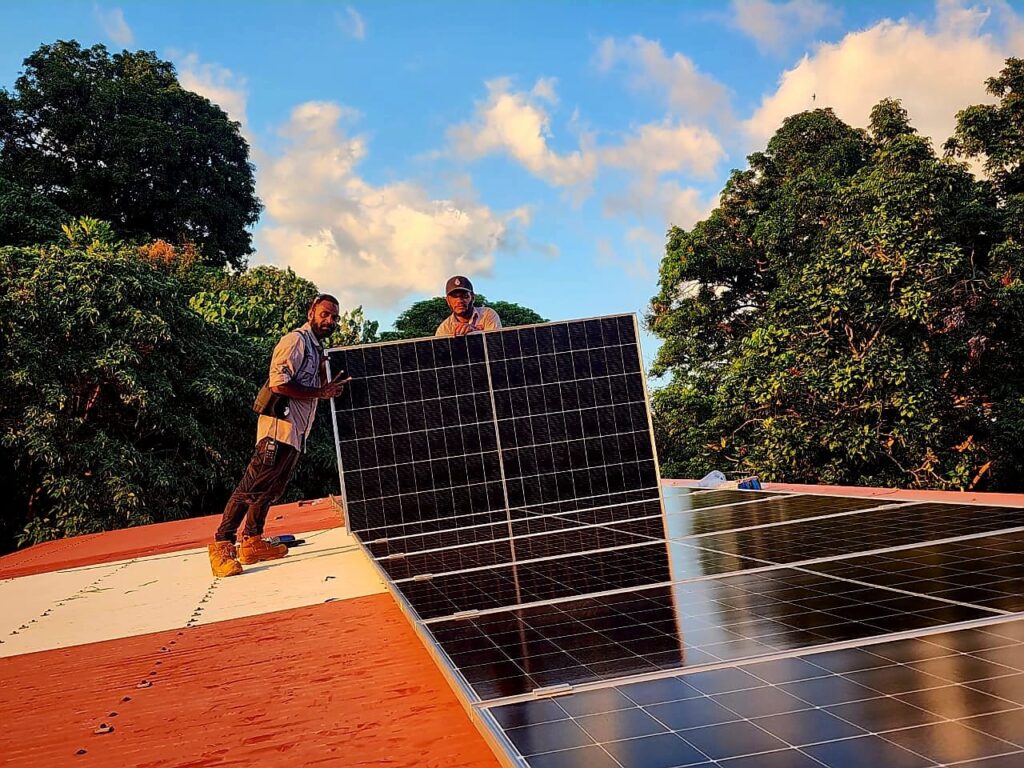
In Vanuatu, Respond Global’s REnew Pacific project didn’t just install and refurbish solar at health facilities, it cleared out the old solar kit too, safely removing e-waste from 38 sites and processing 56 end-of-life batteries through RecycleCorp Vanuatu rather than leaving them to leach into fragile island environments. Ageing lead-acid batteries were replaced with longer-lasting lithium and at least one salvaged system was restored and redeployed to another clinic. Local technicians and trainees from the Vanuatu Institute of Technology were trained alongside the installers and every site custodian was briefed and was left with shut-down instructions in English and Bislama on the wall so the knowledge stays in the community. Find out more here.
Another Vanuatu project, this one led by the Global Green Growth Institute (GGGI), builds this in from the start. Remote monitoring lets technicians spot and fix faults without a boat trip, while each community runs a committee, at least 40% of them women, that collects a small user fee to fund ongoing upkeep. It’s a model that keeps both the systems and the skills to maintain them in local hands. Find out more here.
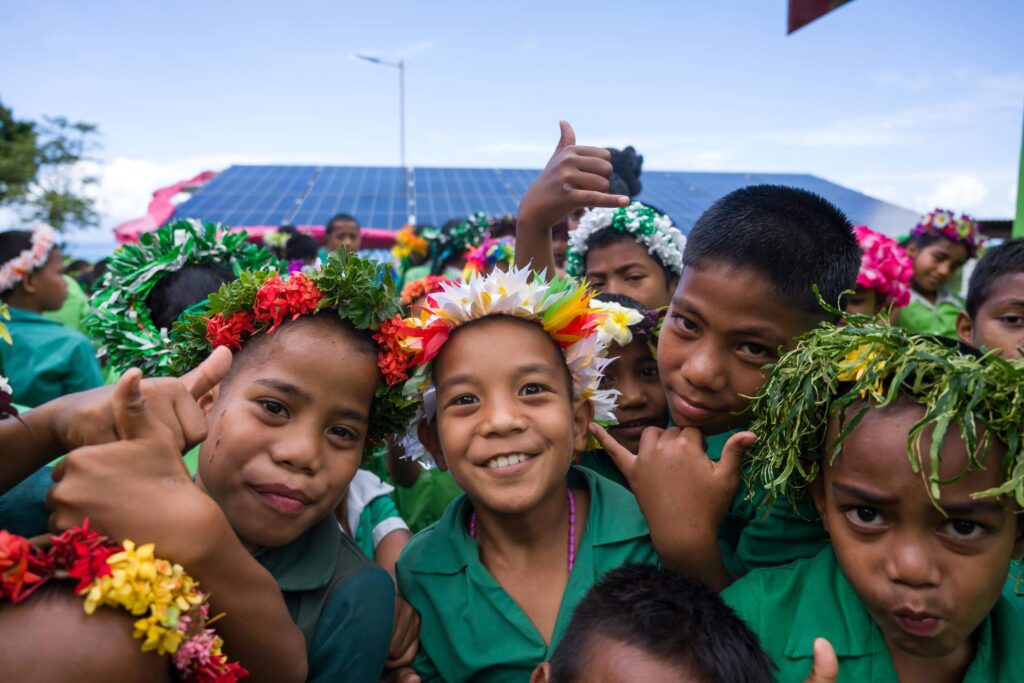
In Fiji, It’s Time Foundation’s REnew Pacific project is proving the same point with money, not just maintenance. Its schools are backed by a dedicated Solar Fund, a protected fund that keeps a solar contractor on retainer for preventive checks and quick-response repairs when something goes wrong. It draws on several sources so it never runs dry: an amount earmarked for each school’s upkeep from the outset, a modest ongoing contribution from the schools themselves that is paid for out of the portion of money they no longer spend on generator fuel plus dedicated grants. Schools also pitch in local transport, meals and labour for maintenance visits, keeping costs down and giving communities a real stake in looking after their own systems. Find out more here.
And in the Marshall Islands, building to last means building for the worst. REnew Pacific’s first project in the country, delivered by UNICEF Australia and partners, is equipping remote schools with cyclone-resilient solar and battery systems, which are elevated, corrosion-resistant and enclosed against saltwater and heat, on low-lying atolls that sit barely two metres above the sea. Designed to keep working through extreme weather, the schools can double as safe community shelters when a storm hits. Find out more here.
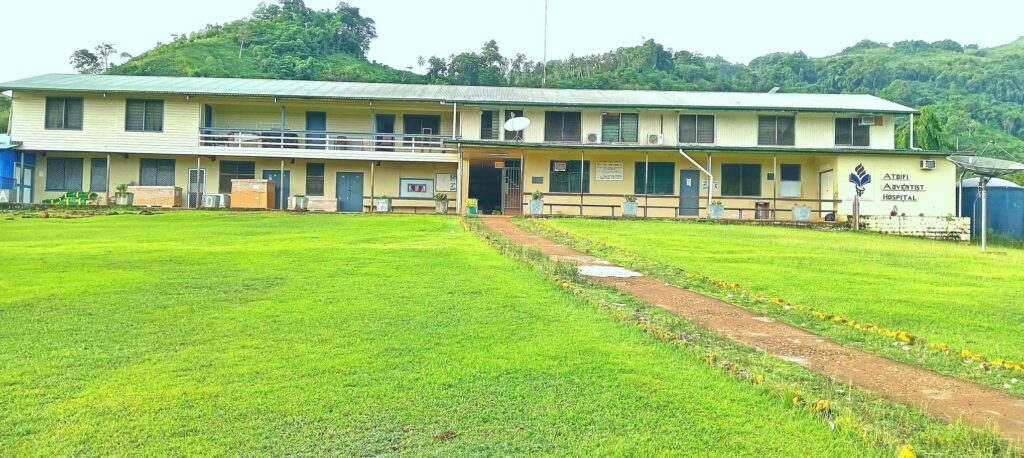
This week’s countdown film comes from Solomon Islands, where Superfly is engineering the same staying power into the hospitals and schools it energises, backing each system with a 10-year commitment, remote monitoring and local servicing.
This is what sustainable really means: not just clean energy but energy that lasts, maintained by local people with the skills and the funding to keep it going. These REnew Pacific projects are all part of the Pacific Climate Infrastructure Financing Partnership (PCIFP), a $350 million initiative for climate infrastructure in the region, delivered by the Australian Government’s Australian Infrastructure Financing Facility for the Pacific (AIFFP) and implemented by Palladium.
Join us each week for a new story as we count down to COP31.