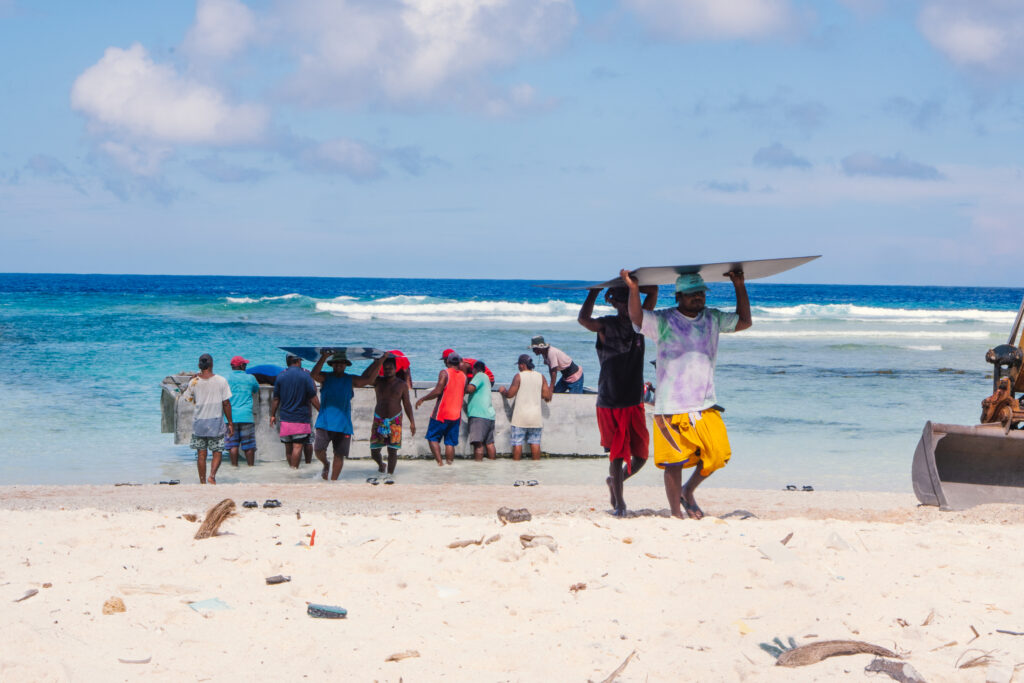
For all the solar panels, batteries and cables, the hardest part of bringing clean energy to the Pacific is often the last stretch: the final miles by boat to an island the national grid will never reach. That’s exactly where REnew Pacific goes. As we continue our countdown to #COP31, we’re following clean energy to the end of the line.
Few places demonstrate this better than Apolima, a tiny island in the strait between Samoa’s two main islands, home to just 11 households. Through REnew Pacific, the Electric Power Corporation (EPC) is replacing the island’s small, ageing power network with a new solar and battery system that runs day and night, with a back-up generator only for long cloudy spells. EPC will own and maintain it, funded by electricity payments, so the island keeps the power on for good. Across Samoa, the same project is reaching another 108 households and five community fales on Upolu and Savai’i that have long lived beyond the grid, replacing wood, kerosene and diesel with clean, safe power. Find out more here.
In Fiji, GGGI is reaching the maritime islands of Lakeba, Rotuma and Vanuabalavu, separated from the main group by long stretches of open sea. Delivering solar-hybrid systems here means shipping equipment across the ocean to reach around 4,900 people, replacing the diesel that has to be barged in with cleaner, steadier power and water. Find out more here.
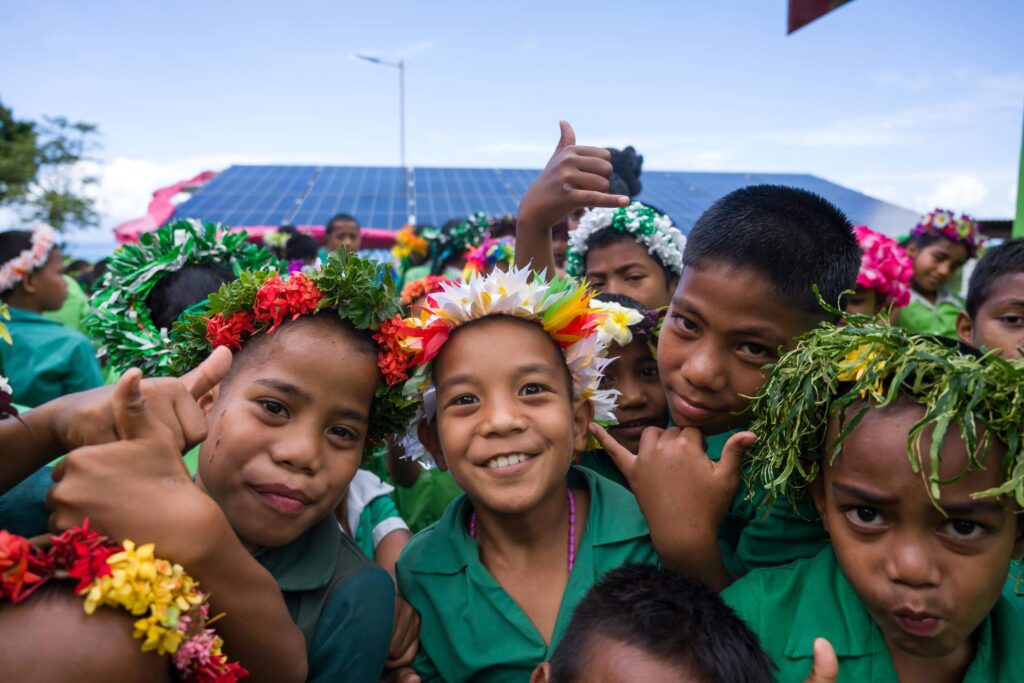
In Kiribati, EcoCare is bringing a whole-of-island solar system to Arorae, the country’s southernmost outer island, home to more than 1,000 people. Reaching every corner of it takes a new mini-grid with battery storage and more than five kilometres of underground cabling, replacing the island’s diesel generators and powering its schools, clinic and community halls and progressively connecting up to 100 homes, with Starlink and e-learning reaching students on the island for the first time. Delivered by local NGO EcoCare Group with CBS Power Solutions and the Arorae Island Council, it’s built to grow as the island’s needs do. Find out more here.
A second REnew Pacific project reaches further still, to Riboono in Abaiang and Tabuarorae in Onotoa, where GGGI and Kiribati Green Energy Solutions (KGES) are installing solar-hybrid mini-grids with battery storage. Around 800 people will gain reliable, round-the-clock power for homes, schools, health centres and small businesses, with the systems built, owned and run locally by KGES to keep them going for the long term. Find out more here.
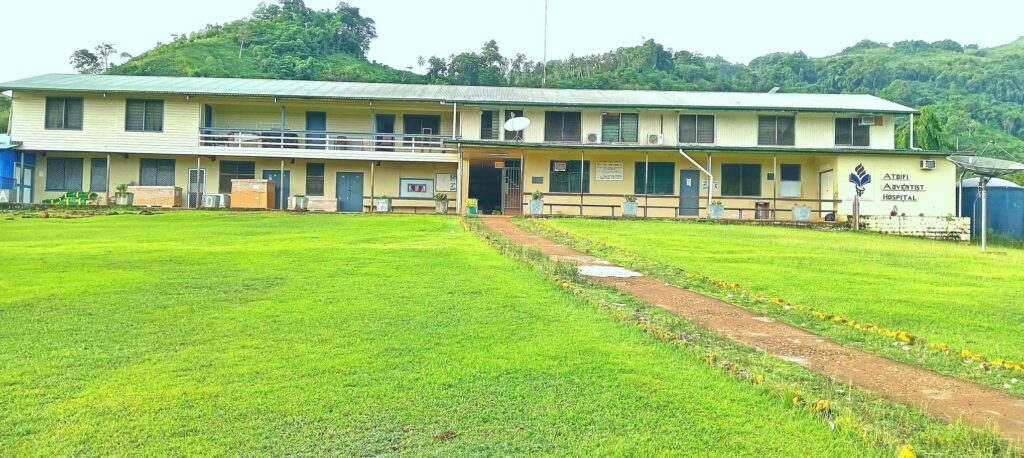
And in Vanuatu, the last nautical mile has a vessel of its own. Respond Global’s HELPR-1 carries solar systems, tools and technicians by sea to health facilities on outer islands reachable only by boat and sets them up on arrival. It’s our first project to complete, installing or upgrading solar at 41 health facilities across all six of Vanuatu’s provinces, bringing reliable power to clinics that serve more than 70,000 people. Find out more here.
Behind every panel installed this far out are the boats, the open-water crossings and the incredible people bringing power where the grid was never going to go. These REnew Pacific projects are all delivered by the Australian Government’s Australian Infrastructure Financing Facility for the Pacific (AIFFP) and implemented by Palladium.
Join us each week for a new story as we count down to COP31.
🎬 This week’s film comes from the recent launch of REnew Pacific’s Kiribati projects, where the Australian High Commission counts us down with now only four weeks to go!